
Barrio de las Letras (Huertas)
Literary quotes in the pavement, century-old taverns and the art museums two streets away.
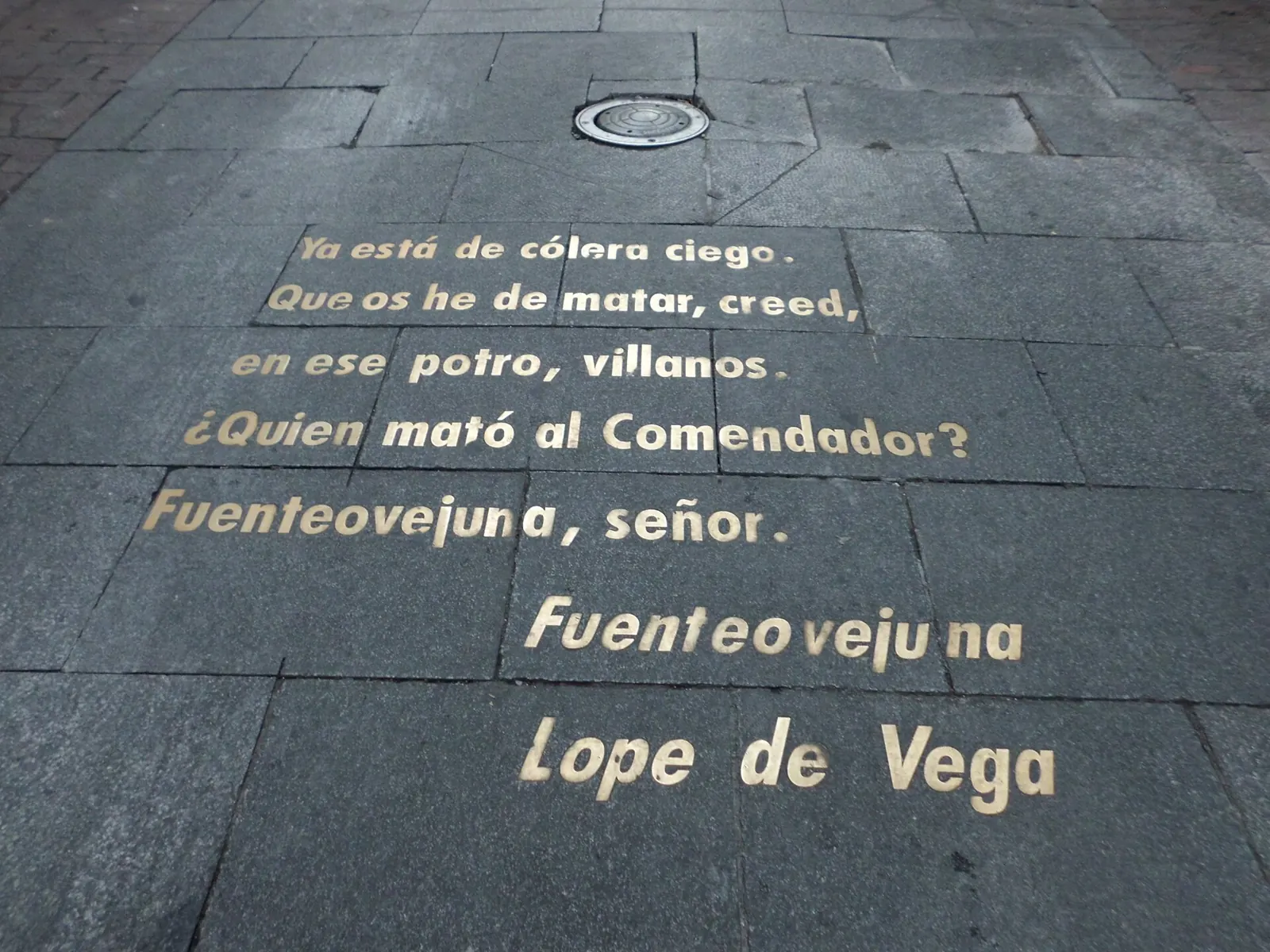
Between Puerta del Sol and the Paseo del Prado lies the quarter where Cervantes, Lope de Vega, Quevedo and Góngora lived and wrote during Spain’s Golden Age. Today it is called the Barrio de las Letras (the Literary Quarter, officially part of the Cortes district), and many locals simply call it Huertas, after the street that crosses it.
It is one of the most rewarding areas to explore on foot: narrow, mostly pedestrian streets, bronze quotations from classic writers set into the pavement, bookshops, theatres and an unbeatable concentration of old-school bars. It is also right next to the three big museums, so it fits almost any itinerary.
What to see
Calle de las Huertas
Look down: the golden letters reproduce lines by the authors who lived here. By day it is a quiet street of shops and cafés; at night it fills with bars and a young crowd.
Casa Museo Lope de Vega
The playwright’s home in his final years, on Calle Cervantes, restored with period furniture and a small garden. Visits are guided, free and in small groups, so book online.
Convent of the Trinitarias Descalzas
On Calle Lope de Vega. Miguel de Cervantes is buried here; it is still an enclosed convent, so you see it from outside (the church opens for services).
Plaza de Santa Ana and Teatro Español
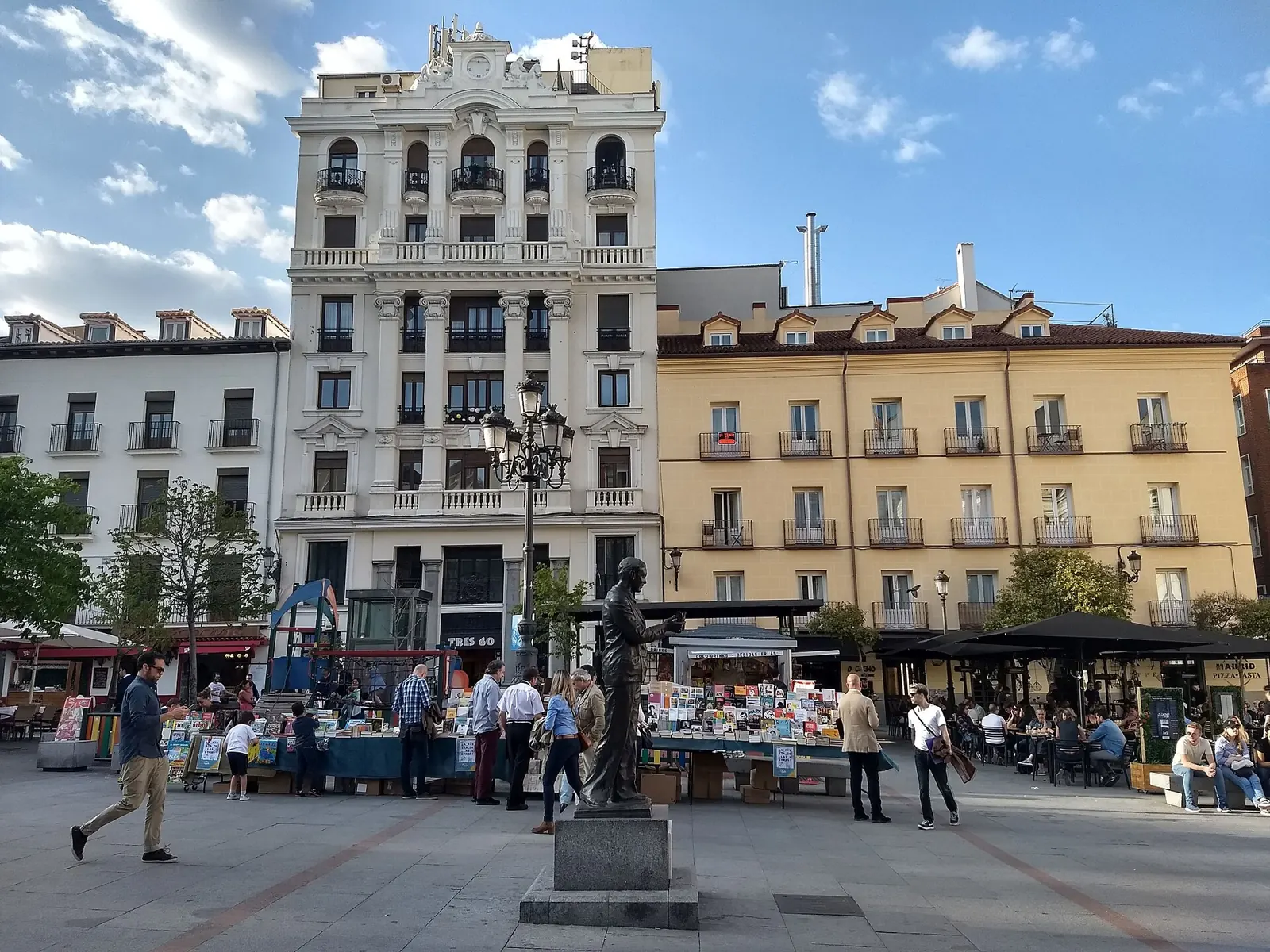
The neighbourhood’s living room, with terraces, a statue of Calderón de la Barca and the Teatro Español, one of Madrid’s oldest theatres.
Ateneo and the Congress
The historic Ateneo cultural club is on Calle del Prado; walk down to Carrera de San Jerónimo to see the Spanish Parliament and its bronze lions.
CaixaForum and the Paseo del Prado
At the end of Huertas you reach the Paseo del Prado, a UNESCO World Heritage Site since 2021 together with the Retiro (the “Landscape of Light”). CaixaForum’s vertical garden is one of the city’s most photographed walls.
Detailed guides: Prado Museum · Thyssen-Bornemisza Museum
Where to eat and go for tapas
This is classic tapas territory: vermouth on tap, prawns, croquetas and sandwiches at bars with decades of history. Well-known spots include Cervecería Alemana on Plaza de Santa Ana, Casa Alberto on Calle Huertas (founded in the 19th century) and La Venencia, a sherry bar on Calle Echegaray where photos and tips are not allowed.
Calle Echegaray and nearby streets offer more modern cooking and international food at reasonable prices. Mercado de Antón Martín, on Calle Santa Isabel, mixes traditional stalls with counters for eating in or taking away.
Full food guide: Barrio de las Letras →
Well-known places are mentioned for information only; we have no commercial relationship with them. Businesses change, so check opening hours before you go.
Getting around
Metro Antón Martín (line 1), Sevilla (line 2) or Sol (lines 1, 2, 3 and Cercanías trains). You can cross the whole area on foot in 15–20 minutes; from Plaza de Santa Ana to the Prado is about 10 minutes downhill along Huertas.
More detail in our metro and commuter train guide.
Tips
- Pair it with the Prado or the Thyssen: use the Prado’s free last two hours and then come back up for dinner in Huertas.
- The terraces on Plaza de Santa Ana are comfortable but pricier than the bars in the side streets.
- From Thursday to Saturday nights Calle Huertas is noisy; for a calmer evening, eat on Echegaray or Lope de Vega before 10 pm.
- On Sunday mornings you can walk to El Rastro flea market in 15 minutes via Tirso de Molina.